Category Archives: Mineral & Royalty Interests

Division Orders Explained: What Mineral Owners Should Review Before Signing

For many mineral owners, a division order arrives at an exciting moment: a well has started producing, ownership has been updated, or long-awaited royalty payments may finally be around the corner. But that excitement can quickly turn into uncertainty. The form looks official, the decimal interest may not be intuitive, and the natural instinct is often to sign first and ask questions later.

That is usually the wrong approach. A division order is an important payment document, but it is not something mineral owners should treat as mere paperwork. It is worth slowing down long enough to confirm that the operator or payor has the right owner, the right property, and the right decimal interest before anything is signed.

Below is a practical guide to what division orders are, why they matter, and what mineral owners should review before signing. Like our earlier posts on inherited interests, revenue statements, and mineral-rights valuation, the goal here is not to turn you into a landman overnight. It is to help you catch the issues that matter, ask better questions, and avoid preventable payment problems.


What Is a Division Order?

At a basic level, a division order is a payment instruction document. It tells the operator or purchaser who should be paid, what type of interest that owner holds, and what decimal interest should be applied to production revenue from the well, lease, or unit.

In plain English, it is the payor’s way of confirming: “This is the person we believe should be paid, and this is the share we believe belongs to them.” If the information is correct, the owner signs and returns it so payments can move forward under that setup.

That is why division orders tend to show up around the start of production, after an ownership transfer, after probate or title curative work, or when a payor changes. They are not the document that creates your mineral rights, and they are not a substitute for the oil and gas lease itself. They are part of the payment process.


Why Division Orders Matter More Than Many Owners Realize

A division order may look like a simple form, but it can affect how smoothly royalty payments begin and how quickly mistakes are caught. If the owner name is wrong, the tax identification number is outdated, the property is misdescribed, or the decimal interest is off, the problem can carry forward into payment statements, year-end tax reporting, and even future sale or valuation work.

This is especially important for families who inherited interests, owners with multiple small fractional tracts, and anyone whose ownership has changed over time. In those situations, a division order is often the first place a title or payment error becomes visible.

In Texas, the Railroad Commission notes that a payor may require a signed division order containing certain statutory components before paying proceeds, and it also notes that a division order does not amend the lease or operating agreement between the owner and lessee. That distinction is important. The form may govern payment administration, but it should not be used to rewrite the deal you already have.


What Mineral Owners Should Review Before Signing

The best way to approach a division order is to read it line by line with your supporting documents nearby. That usually means having the lease, probate or deed records, any ownership transfer paperwork, and recent revenue statements if payments have already started.

1. Confirm the owner name, mailing address, and tax ID setup

Start with the simple items. Make sure the payee name matches the person or entity that should be receiving payment. Confirm the mailing address is current, and if the form requests taxpayer information, make sure it is consistent with how the interest is actually owned.

This matters more than it seems. Payments can be delayed or suspended over something as basic as an old address, a deceased prior owner still listed as payee, or a trust or LLC that was never fully updated in the payor’s records.

  • Payee name matches the actual owner
  • Mailing address is current
  • Taxpayer identification details match the ownership structure

2. Check the well, lease, tract, or unit description

Do not assume the property description is correct just because the form arrived from a recognized operator. Review the lease name, well name, county, state, and any unit designation shown on the division order. If you own more than one interest in the same county, or if multiple family members inherited related tracts, mix-ups can and do happen.

A division order should tie clearly to the property from which you expect revenue. If it does not, pause before signing.

  • Well or lease name
  • County and state
  • Unit or tract description
  • Whether the property matches the interest you expected to be paid on

3. Verify the type of interest being shown

The form should identify whether the owner is being paid as a royalty owner, overriding royalty owner, working interest owner, or another type of payee. That classification affects how payments are handled and how the underlying ownership should be understood.

If you are unsure which category applies to you, it helps to compare the form against your deed, lease, or probate paperwork. Our earlier blog on Types of Mineral & Royalty Interests can also be a useful refresher when the terminology is unfamiliar.

4. Scrutinize the decimal interest

For most owners, this is the single most important number on the page. The decimal interest is the share of production revenue the payor intends to use when calculating payments. If that number is wrong, every check that follows may also be wrong.

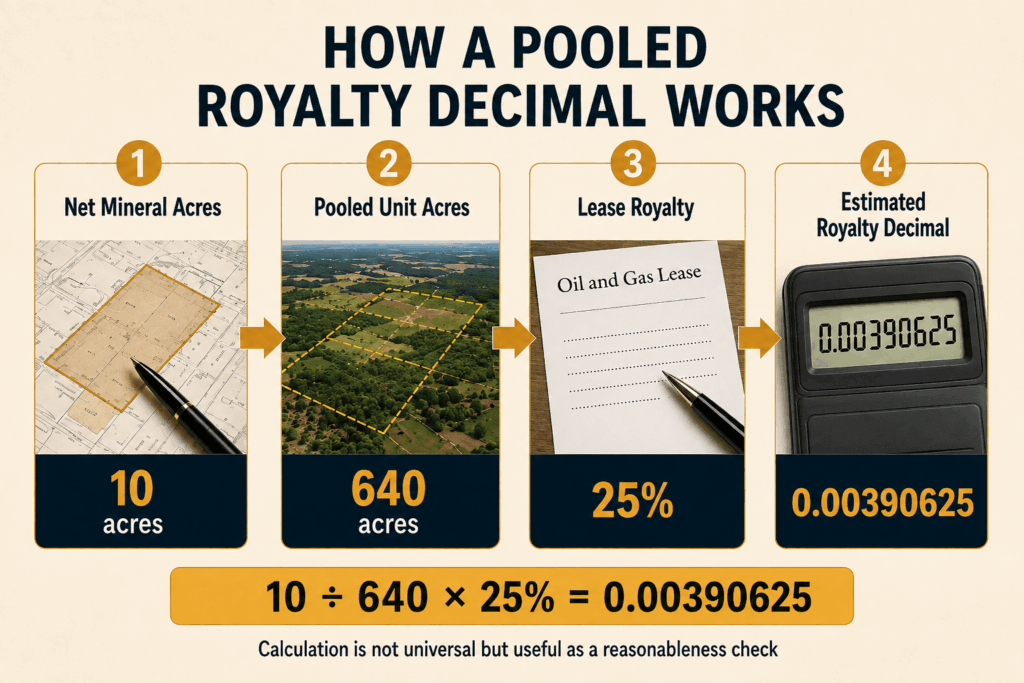
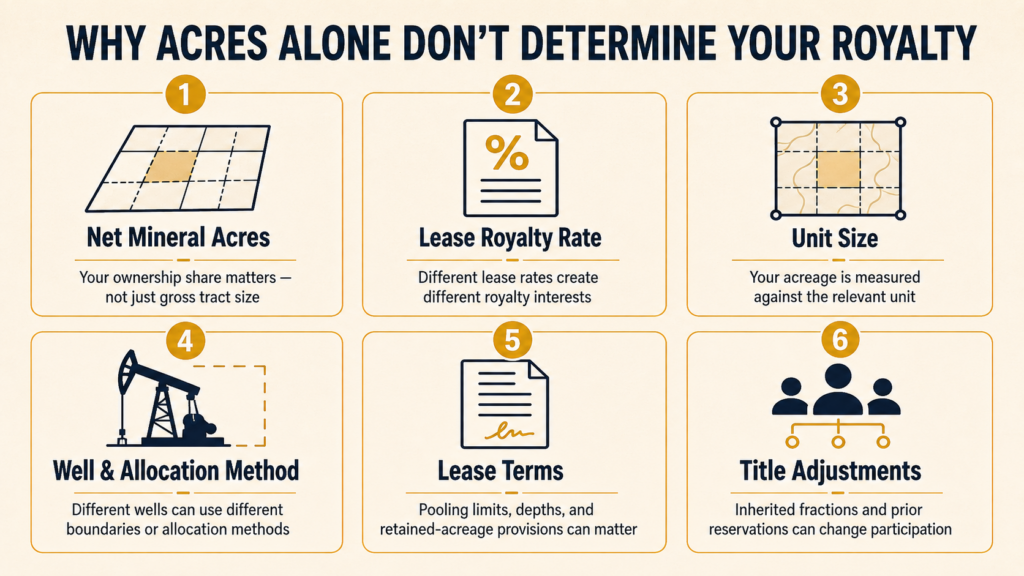
The challenge is that the decimal is not always easy to recognize from memory. It can reflect your ownership percentage, the royalty rate in the lease, the number of net mineral acres involved, the size of the pooled unit, and in some cases tract participation or other title adjustments. That means a decimal can be perfectly accurate even when it does not “look right” at first glance — but it also means mistakes are easy to miss.

A good practical check is to ask: does this decimal generally line up with what I know about my ownership? If you inherited one-sixth of a royalty in a tract that was later pooled into a larger unit, the number may be much smaller than expected. If the figure looks wildly different from prior statements, prior division orders, or the ownership share reflected in estate paperwork, ask for support before signing.

  • Compare it to prior division orders or revenue statements if you have them
  • Compare it to your lease royalty and ownership share at a high level
  • Ask the payor how the decimal was derived if the number seems materially off

5. Review the effective date

The effective date can matter more than owners realize. It helps define when the payor intends the payment setup to begin. If ownership changed because of death, probate, deed transfers, divorce, or trust planning, the effective date should make sense in light of those events.

A mismatch here can create confusion later when owners try to reconcile old checks, suspense releases, or missing payments.

6. Read the non-decimal language carefully

Many mineral owners focus on the decimal and skip the surrounding terms. That is risky. Read the language around title certification, notice of ownership changes, indemnity, suspension of payment during disputes, and any references to valuation or timing of settlement.

In Texas, the statutory framework for division orders includes items such as the property description, decimal interest, type of interest, notice obligations for ownership changes, payee information, and certain payment-administration terms. A form that goes beyond confirming payment mechanics and tries to alter lease economics should be treated cautiously.

7. Make sure the payor is the right company

Sometimes the company paying revenue is the operator. Sometimes it is a purchaser or another payor acting on behalf of the operator. Either way, make sure you know who is sending the division order and how that company relates to the property.

That step can save headaches later when reconciling revenue statements, requesting corrections, or following up on missing checks.


How to Sanity-Check the Decimal Without Overcomplicating It

Not every owner needs to build a full land calculation from scratch. But you should understand the basic inputs that usually drive the decimal shown on a division order.

For a standard royalty owner, the number often reflects some combination of your net mineral ownership, your royalty rate under the lease, and the share of the tract included in the producing unit. For overriding royalty, NPRI, and working-interest situations, the path can be different. That is one reason generic online formulas can mislead owners when applied too mechanically.

If you have questions, ask the payor for the decimal breakdown or ask a land professional to walk through it with you. A ten-minute explanation before signing can be more valuable than months of chasing corrected payments later.

Practical rule of thumb: if the decimal is slightly unfamiliar, ask for an explanation. If it is dramatically different from your records, do not sign until the difference is resolved.


Common Reasons a Division Order Gets Delayed or Sent Back

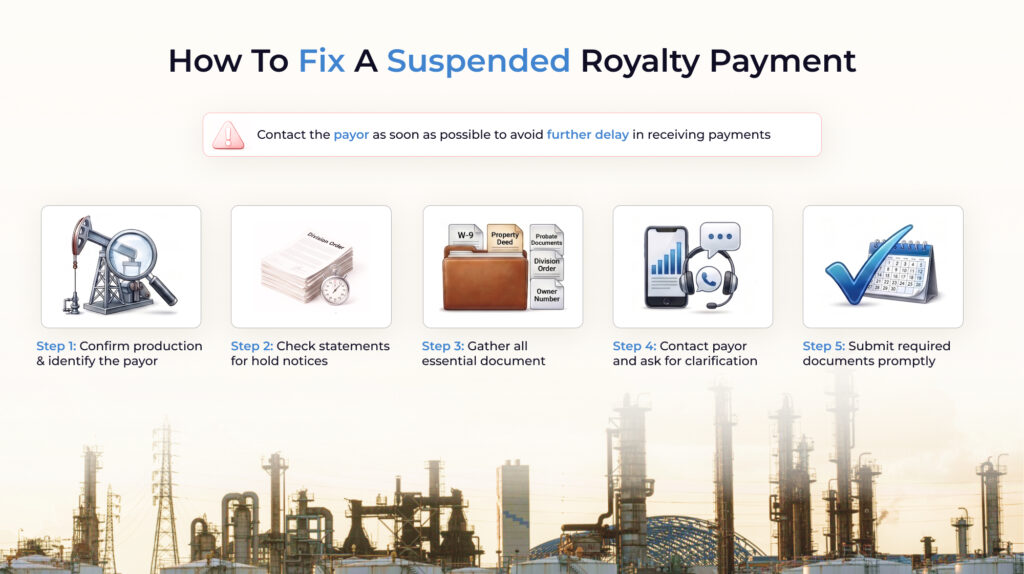
Owners are often frustrated when the first payment takes longer than expected, but the delay is not always caused by bad faith. In many cases, the hold-up is administrative or title-related. The company may be waiting on probate documents, affidavits of heirship, deed recordings, entity paperwork, a W-9, or clarification of how a fractional interest should be carried.

That said, owners should not assume every delay is normal. If months have passed and the paperwork seems complete, it may be time to ask whether the payor has an unresolved title requirement, a division order issue, or a suspense classification on the account.

  • A deceased owner remains in the payor’s system
  • Probate or transfer documents were never fully received or indexed
  • The owner name on the form does not match the tax documentation
  • The decimal interest is still under review after pooling or title curative work
  • There is an adverse claim or a dispute among heirs or co-owners

Division Orders vs. Revenue Statements: Do Not Confuse the Two

A division order tells the payor how to set up payment. A revenue statement shows how a particular payment was calculated after production was sold. They work together, but they are not the same document.

That distinction matters because owners sometimes look at a revenue statement, see a decimal there, and assume the division order must have been right all along. In reality, a mistaken decimal can carry forward from one document to the next. If you want to understand the payment side after signing, our earlier post How to Read a Revenue Statement is a helpful companion piece.


When It Is Worth Asking for Help Before You Sign

Some division orders are routine. Others deserve a closer look. If the ownership is inherited, the decimal is unclear, multiple tracts are involved, or the form includes language you do not understand, it may be worth getting a second set of eyes on it before you return it.

That does not always mean hiring a lawyer for a major project. Sometimes it simply means asking the payor’s division-order analyst for backup, speaking with a landman, or consulting an oil and gas attorney when the ownership history is complex. The right level of help depends on what is at stake.

  • You inherited the interest and are still sorting out title documents
  • The decimal appears inconsistent with your lease or prior paperwork
  • The form references multiple wells, units, or tracts you do not recognize
  • You are being asked to sign on behalf of a trust, estate, LLC, or other entity
  • The language appears to do more than confirm payment instructions

Final Thoughts

A division order is not something mineral owners need to fear, but it is also not something they should treat casually. When the owner name, property description, and decimal interest are all correct, the form can be a routine part of getting revenue started. When one of those items is wrong, signing too quickly can make a small problem harder to unwind.

The best habit is simple: review first, sign second. Keep the lease, transfer documents, and prior payment records nearby. Compare the form to what you already know. Ask questions when the decimal does not make sense. And if the situation is complicated, get help before the paperwork becomes the new baseline for future payments.

At Allegiance Oil & Gas, we work with mineral and royalty owners every day who are trying to understand what they own, why the paperwork looks the way it does, and how to make smart decisions from there. If you need help making sense of an inherited interest, a payment document, or the broader value of your minerals, our team is happy to help you get clarity.

Disclaimer: This article is for general informational purposes only and is not legal or tax advice. Division order requirements and payment practices can vary by state, operator, and ownership structure. Mineral owners should consult qualified legal or land professionals regarding their specific circumstances.

Mineral Owner Tax Season Checklist for 2026: 1099s, Lease Bonuses, Depletion, and Common Filing Mistakes

For many mineral and royalty owners, tax season sneaks up the same way every year. The checks may have come in month by month, but by March the paperwork often feels anything but simple. One operator may have issued royalty income, another may have paid a lease bonus, and somewhere in the stack there may be a sale closing statement, suspended funds release, or an ownership transfer related to an inheritance.

By the time Form 1099s arrive, it is easy to assume everything belongs in one bucket. Usually, it does not. The good news is that a little organization goes a long way. Before you file, it is worth slowing down, sorting the income by type, and making sure nothing important gets overlooked.

Below is a practical checklist designed specifically for mineral and royalty owners. It is not meant to replace advice from a CPA or tax attorney, but it can help you ask better questions and avoid the most common filing mistakes.


Step 1: Gather every mineral-related document before you start

Do not prepare your return from memory or from bank deposits alone. Start by pulling together every document connected to your mineral interests for the 2025 tax year. That usually includes Form 1099s, operator revenue statements, division orders, year-end summaries, and any closing paperwork if you sold all or part of an interest.

If you inherited an interest, include probate documents, transfer paperwork, and any correspondence showing when the operator changed the payee information. If you own interests in multiple counties or through multiple operators, make one folder for each property or payor. That extra organization upfront can save a great deal of confusion later.

  • Form 1099-MISC statements from operators or lessees
  • Monthly or annual revenue statements
  • Lease documents if a new lease or extension was signed
  • Closing statements if you sold any portion of your interest
  • Ownership-transfer documents for inherited or gifted interests
  • A copy of last year’s return, especially if depletion was claimed

Step 2: Separate royalties from lease bonuses

This is one of the easiest places to make a mistake. Royalty income and lease bonus income may both come from the same property, but they are not always reported the same way. In many cases, royalty payments are shown on Form 1099-MISC as royalties, while lease bonuses are shown separately as rents.

That distinction matters because it affects how the income is described on the return and how your preparer reviews the file. If a payment does not seem to match the box where it was reported, do not just ignore it. Ask questions before filing. The goal is to make sure the paperwork matches what actually happened on the property.

  • Monthly or intermittent production checks are usually royalty income
  • An up-front payment for signing a new oil and gas lease is commonly a lease bonus
  •  A one-time payment tied to a sale should not automatically be treated like a royalty check
  • If you received both royalties and a lease bonus in the same year, keep them clearly separated in your records

Step 3: Do not treat sale proceeds like royalty income

Mineral owners often have a year when they receive ordinary royalty checks and also decide to sell all or part of an interest. When that happens, it is a mistake to throw every dollar into the same category. Sale proceeds are not simply another month of royalties.

A full sale, a partial sale, and a sale where the owner keeps a royalty can each create different tax consequences. Even if the transaction seemed straightforward at closing, the reporting can be more nuanced at tax time. If a sale took place in 2025, make sure your preparer sees the deed, purchase agreement, and settlement statement — not just the amount that hit your bank account.

For further discussion on the tax implications of a mineral interest divestiture, check out our blog Tax Implications of Selling Your Mineral Interest.


Step 4: Ask about depletion before you file

Depletion is one of the most commonly overlooked tax items for mineral owners. In plain English, depletion is the tax concept that allows an owner with an economic interest in mineral property to account for the fact that the resource is being produced and reduced over time. For the right owner, that can reduce taxable income.

Many owners remember their gross revenue but forget to ask whether depletion applies. That can be an expensive oversight. There are different ways to calculate depletion, and the right method depends on the facts. The important point is simple: if your return includes mineral or royalty income, depletion should at least be part of the conversation.

  • Do not assume your preparer will spot it without being prompted
  • Have prior-year returns available if depletion was claimed before
  • Keep any basis or acquisition records you have, especially for purchased or inherited interests
  • If your ownership changed during the year, mention that before the return is finalized

Step 5: Reconcile your 1099s to the underlying statements

A Form 1099 is important, but it is not the whole story. Before filing, compare each 1099 to the underlying operator statements. Check whether year-end timing, suspense releases, ownership changes, or corrected payments explain any difference between what you expected and what was reported.

This step is especially important for inherited interests and for owners who changed addresses, taxpayer identification numbers, or entity structure. A simple mismatch can lead to avoidable notices later – or you could even discover that one of your royalty checks was lost in the mail!  It is much easier to fix problems before a return is filed than after the IRS has matched the forms.

  • Confirm the payor name on the 1099 matches the operator or purchaser you expected
  • Review December and January statements carefully for timing issues
  • Ensure you have actually received and deposited the entire income mentioned on the 1099
  • Look for suspense releases, prior-period adjustments, or corrected payment runs
  • Verify the taxpayer name and identification number are correct
  • Keep notes if you had to ask an operator for a correction or explanation

Step 6: Watch for the most common filing mistakes

Most mineral-owner tax problems are not caused by complicated law. They are caused by small classification errors, missing paperwork, or assumptions that turn out to be wrong. A quick review before filing can prevent most of them.

  • Reporting a lease bonus as royalty income — or the other way around
  • Missing a second 1099 from a different operator, purchaser, or property
  • Forgetting to ask about depletion
  • Reporting sale proceeds as ordinary royalty income
  • Using deposit totals instead of 1099s and revenue statements
  • Assuming inherited interests were reported under the correct owner name and tax ID
  • Being surprised by a tax bill because no federal income tax was withheld during the year

Step 7: Know when it is worth bringing in a CPA or tax attorney

Some years are simple. Others are not. If all you received was routine royalty income from one operator, your filing may be fairly straightforward. But if you sold an interest, inherited minerals, own through a trust or LLC, or hold a working interest, the return deserves closer attention.

Professional help is especially worthwhile when the facts changed during the year. A short conversation with a qualified tax advisor can prevent an incorrect filing, missed deduction, or reporting issue that becomes more expensive later.

  • You sold all or part of a mineral or royalty interest in 2025
  • You inherited an interest and are unsure when ownership changed for tax purposes
  • You received both lease bonus income and royalty income from the same property
  • You own through a trust, estate, partnership, or LLC
  • You have a working interest rather than a simple royalty interest
  •  A 1099 appears incorrect or does not match your records

Final Thoughts

Tax season tends to go better when mineral owners treat it as an organizational exercise first and a filing exercise second. Once the paperwork is sorted, the real questions become much easier to answer: What was royalty income? Was there a lease bonus? Did a sale occur? Was depletion considered? Did the 1099s match the underlying records?

At Allegiance Oil & Gas, we work with mineral and royalty owners every day who are trying to understand what they own, what income it produced, and what their options are going forward. If you need help making sense of the property itself — especially after an inheritance, a sale inquiry, or a year of unusual activity — our team is happy to help you get clarity before the next decision has to be made.

Disclaimer: This article is for general informational purposes only and is not legal, tax, or accounting advice. Federal and state treatment can vary based on ownership type, transaction structure, and individual circumstances. Mineral owners should consult a qualified tax professional regarding their specific return.

Energy Market Expectations for 2026: What Mineral & Royalty Owners Should Know

As we enter 2026, many mineral and royalty owners are asking the same question: What will the year ahead bring for my oil and gas interests?

After years of price volatility, regulatory shifts, and changing drilling strategies, contemplating the future can feel “dizzying”.

Nonetheless, broader market trends are affecting mineral valuations, and understanding these trends can help owners make more confident, informed decisions in the management of their assets.


Oil & Gas Market Outlook for 2026

The oil and gas industry enters 2026 focused on efficiency and profitability. With the proliferation of numerous technological innovations (artificial intelligence being one), operators are behaving in a more disciplined and data-driven fashion than ever before.

In practice, this means operators are, for the most part, prioritizing the maximization of returns on their existing acreage rather than planning for rapid growth in drilling efforts or an expansions to new regions or plays.

For mineral owners, this means “the green will get greener, and the red will get redder” — e.g. high output properties in prolific shale plays are likely to get a great deal of attention and development this year, while fringe or speculative areas are likely to stay on the shelf.

On the commodity price front — crude oil prices remain sensitive to global events such as geopolitical tensions and OPEC+ production decisions. Natural gas markets are increasingly influenced by LNG exports and domestic power demand. We expect developments related to these macroeconomic factors to weigh most heavily on commodity prices this year.


Where Drilling Activity Is Concentrated

Drilling activity continues to focus on proven basins with strong geology and infrastructure. Areas like the Permian Basin, Eagle Ford, Bakken, and Haynesville remain top priorities.

While fewer wells are being drilled compared to past cycles, modern wells tend to be more productive. Mineral owners in core areas may continue to see reliable royalty income, while marginal acreage may experience limited development.


How Energy Market Trends Affect Mineral & Royalty Values

Mineral and royalty values are not based solely on today’s prices. Longstanding buyers like Allegiance Oil & Gas evaluate assets using long-term price expectations (an entire futures price curve), production decline rates, operator performance, and drilling plans – all in a holistic manner.

Less sophisticated buyers may skirt on one or more of these assumptions, applying, for example, flat pricing assumptions, which can lead to dramatically different (and usually less aggressive) mineral valuations.

This is why two mineral owners in the same county may receive very different offers for their acreage. We expect these discrepancies to continue to arise in 2026, though less sophisticated buyers are slowly being squeezed out of the marketplace and this may prove less of an issue in the years ahead.


Technology Is Changing How Minerals Are Valued

Advanced data analytics and AI tools are reshaping how quickly mineral assets can be evaluated, even using advanced valuation techniques.

Sophisticated buyers having access to these tools can use detailed production data and forecasting models to assess risk and value in a rapid fashion.

For mineral owners, this means more offers, faster timelines, and wider variation in pricing quality.


Policy, Regulation, and the Energy Transition

Despite growth in renewable energy, oil and natural gas remain critical to the global economy. Transportation, power generation, and petrochemicals continue to rely on hydrocarbons.

From what we know so far, 2026 will not be a year of significant renewable energy migration.

On a 5 to 10 year time horizon, renewable energy could become more of a factor.


Divestiture Is Always A Viable Option

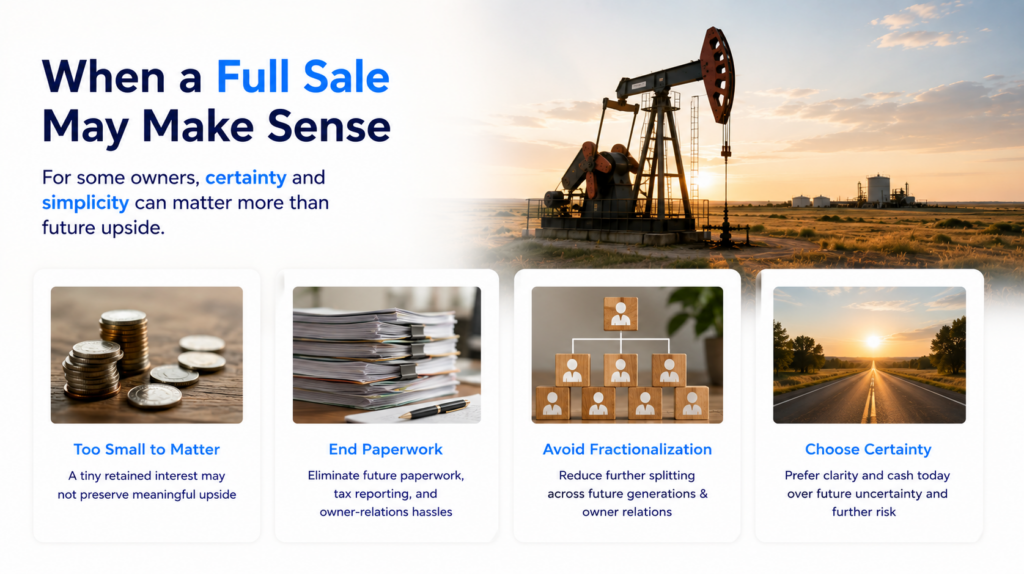
The start of a new year is an ideal time to reassess your mineral interests. Consider whether your income is stable, whether your property is in an active drilling area, and whether liquidity would better serve your personal needs.

There is no universal right decision—only what aligns best with your goals.

Allegiance Oil & Gas provides mineral owners with transparent & no-obligation valuations as well as pressure-free education & guidance for your unique situation. Whether you decide to sell now, later, or not at all, our goal is to help you move forward with confidence.

Should you be interested in receiving a no-obligation offer for your mineral or royalty interests, please visit our Request an Offer page.

Navigating Ownership Transfers: What To Do When You Inherit Mineral Rights

Inheriting mineral or royalty interests can feel both exciting and overwhelming. For many families, these assets have been passed down for generations — yet few heirs receive clear guidance on what they actually own or how to manage it. At Allegiance Oil & Gas, we speak every day with individuals who suddenly find themselves responsible for these oil and gas interests.

Whether you plan to keep, lease, or sell mineral rights, understanding the steps to take right after inheritance is critical. This guide walks through the essentials so you can make informed decisions with confidence.


Step 1: Confirm What You Inherited

Many heirs are surprised to learn that mineral rights often come with incomplete records. Before taking action, you must confirm:

  • Type of interest: mineral interest, royalty interest, NPRI, ORRI, working interest, etc (full breakdown in our earlier blog on the Types of Mineral & Royalty Interests)
  • Location of the property: county, state, and legal description.
  • Ownership percentage: full, fractional, or undivided share.
  • Status of production: producing vs. non-producing.

If the prior owner kept good records, this step is straightforward. But if documents are missing or outdated — a common scenario — you may need help tracking down deeds, revenue statements, or division orders.  Allegiance routinely assists families in locating and interpreting these documents as part of our valuation process.


Step 2: Understand Your Legal Requirements

Ownership transfer of mineral rights typically involves:

  • Probate proceedings in the state where the prior owner lived.
  • Recordation of new deeds in the county where the minerals exist.
  • Confirming ownership with operators, so royalty payments can be redirected.
  • Informing tax authorities, so property tax bills can be directed properly.

This process can range from simple to complex depending on your state’s laws and how the estate was structured. Some heirs assume royalties will “just keep coming” — but operators often require new paperwork before payments resume.

If you inherited multiple small fractional interests (common over several generations), this can add additional administrative burden.


Step 3: Evaluate the Financial Picture

Once ownership is confirmed, you’ll want to assess the asset’s value. This requires understanding:

  • Historical production and revenue patterns
  • Operator performance and drilling plans
  • Commodity price trends
  • Decline curves and long-term potential
  • Geographic factors, including basin and operator health

Unlike traditional real estate, mineral rights value can vary widely and is often unpredictable. Many heirs choose to request a professional valuation so they can decide whether holding or selling makes the most sense.

Allegiance Oil & Gas provides free, no-obligation valuations that weigh production, price forecasts, and operator data to estimate market value.


Step 4: Decide Whether to Keep or Sell

Inherited mineral interests come with benefits — but also responsibilities.

Reasons heirs choose to keep the interest:

  • Long-term royalty income
  • Emotional connection to family property
  • Belief in future drilling upside

Reasons heirs choose to sell:

  • Immediate liquidity for estate needs
  • Eliminating administrative burden
  • Avoiding complex paperwork, taxes, and title issues
  • Concern over commodity volatility
  • Preventing further fractionalization among the next generation

If multiple heirs share the interest, selling often provides a simpler and more equitable outcome than dividing fractional stakes.


Step 5: If You Choose to Sell, Choose a Transparent Buyer

Selling mineral rights should be straightforward — but for many heirs, it isn’t. Offers can vary widely, and some buyers rely on confusing or high-pressure tactics.

At Allegiance Oil & Gas, we emphasize:

  • Fair, honest, transparent mineral & royalty acquisitions
  • A simple three-step process: request an offer → execute documents → receive payment
  • No hidden fees or closing costs
  • Nationwide purchasing with flexible closing options

Heirs often find that selling provides clarity and financial stability during what can otherwise be a stressful transition.


Final Thoughts

Inheriting mineral rights doesn’t have to be confusing or overwhelming. By taking the proper steps — confirming ownership, understanding legal requirements, evaluating value, and deciding whether to hold or sell — you can make a confident decision that serves your family’s needs.

If you’ve recently inherited mineral or royalty interests and want clarity on their value or your options, Allegiance Oil & Gas is here to help. Our team combines deep industry expertise with a commitment to transparency, making the process smooth and stress-free.

Want help understanding what you’ve inherited?
Request a free valuation today — we’re here to support you and your family every step of the way.

Estate Planning with Mineral Interests: What Every Family Should Know

Owning mineral or royalty interests can be a blessing. They provide income, connect families to America’s energy story, and sometimes represent land that has been in the family for generations. But when it comes to estate planning, these assets often raise more questions than answers.

At Allegiance Oil & Gas, we work with families every day who are navigating how to manage, transfer, or preserve mineral interests as part of their legacy. Below are practical strategies, legal tools, and things to consider so that your mineral assets are handled cleanly, fairly, and in alignment with your wishes.

Why Mineral Interests Complicate Estate Planning

Mineral and royalty interests are not like bank accounts or stocks. They come with particular legal, tax, and administrative complications:

Fractionalization: Over generations, ownership often becomes divided among many heirs. Each may hold a small share, making management, decision-making, and coordination harder.

Title and deed history: Mineral deeds may be old, incomplete, or scattered across counties and states. Problems in documentation can delay probate or complicate transfers.

Income variability: Royalty checks can fluctuate depending on production volumes, commodity prices, lease terms, etc. That makes income projections and estate valuations less certain.

Tax considerations: Inherited mineral interests may benefit from a “stepped-up basis,” but there may also be federal estate tax concerns (especially for very large estates) and state taxes. 

Key Estate Planning Tools & Strategies

Many families use the below tools and strategies to preserve value, reduce administrative burden, and ensure clarity for heirs. As always, you should consult with an estate attorney, oil & gas legal expert, and tax advisor in your state because laws differ.

Trusts

Revocable Trusts: These allow you to maintain control during life, make changes, and avoid probate in many cases. You can transfer your mineral interests into a revocable living trust, naming beneficiaries to receive them after death. 

Irrevocable Trusts: These give up more control but can offer stronger tax protection and remove the asset’s value from your taxable estate. This can be important if your mineral assets are large or expected to appreciate significantly. 

Mineral Trusts: A specialized version. They manage mineral or royalty interests as a single entity, handle distributions, and often help in limiting fractionalization. They can include clarity on who does what (trustee/managers), how royalties get distributed, and what happens when an heir is not locatable. 

Life Estate Deeds

In some jurisdictions, you may grant a life estate: you maintain the rights (and income) during your lifetime, but title automatically transfers to the named heirs at your death (without waiting for probate). This can simplify the transfer process and reduce paperwork. 

Gifting During Lifetime

You can also give (gift) your mineral interests (or portions) to heirs during your lifetime. This shifts ownership early, which can reduce estate tax exposure if done properly. But gift tax rules and valuations matter: you’ll need accurate appraisals, and large gifts may require filing gift tax returns. 

Limited Liability Companies or Partnerships

Holding mineral interests through an LLC or family partnership (or multiple entities) can help centralize management, define how decisions are made, and provide flexibility in dividing income. It can help heirs understand expectations and avoid confusion. It can also help with liability protection or separating administrative functions.

Succession Planning for Management and Distribution

Identify a trustee, manager, or entity who understands the oil and gas side: lease negotiations, royalty statements, title issues, etc.

Clearly describe in your legal documents how revenues are to be distributed among beneficiaries. When there are many heirs or stakeholders, having written direction reduces disputes.

Maintain good records: operator contacts, royalty payment statements, title documents, leases. Ensuring heirs know where to find these is as important as legal structure.

Appraisals and Valuations at Key Times

For inherited properties, getting a professional appraisal around the time of death sets the “stepped-up basis” for heirs, which can reduce capital gains taxes when they sell in the future. 

Also worth doing periodic valuations if you expect leasing opportunities or new wells, so you understand long-term value.

Consider State & Multi-state Issues

Mineral rights may be in different states from where you live. Probate, deed laws, inheritance taxes, and recording rules differ by state. Avoiding probate in multiple states (ancillary probate) is a common goal. 

State inheritance taxes or property/estate taxes may apply in some states even if there is no federal tax for your estate size. Always check state law. 

Tips to Avoid Common Mistakes

Don’t let mineral interests become a “forgotten asset.” If deeds are inaccurate or not located, heirs may not even realize what’s there. 

Be cautious about over-fractionalization. Small fractional shares can lead to complexity and decreasing net benefit when many heirs are involved.

Keep legal documents up to date, especially after major life changes (marriage, divorce, births, deaths).

Choose trustees/managers with knowledge and integrity. Mismanagement of royalty division orders, leases, or title can cost heirs time and money.

Understand the costs: trusts, appraisals, legal fees, ongoing administration. Sometimes those costs can outweigh benefits if the asset is small.

Estate Planning vs Selling Mineral Interests

While some strategies focus on preserving, managing, and transferring mineral interests rather than selling them, there are pros and cons to simply selling the mineral interests which should also be considered:

Pros: Simplicity; liquidity; avoiding potential future disputes; immediate value; easier tax treatment after sale.

Cons: Loss of future royalty income; missing out on upside from future wells or leasing; potential regret if market improves; you lose control over how the asset will be managed.

To further discuss a potential divestiture, don’t hesitate to reach out to us at (281) 674-7131 on via the form on our Request An Offer page.

Estate planning with mineral interests is about more than just passing assets down, it’s about ensuring those assets work for your family while minimizing legal and tax burdens, reducing family friction, and making sure your wishes are clearly documented and respected. If mineral or royalty interests are part of your legacy, it pays to plan ahead.

When to Sell Your Mineral Rights: Timing Strategies for Maximizing Value

Deciding whether, and when, to sell your mineral rights is one of the most consequential financial choices a mineral owner can make. These assets are unique: unlike other investments, their value isn’t only tied to what’s in the ground, but also to the broader energy market, operator activity on your acreage, and even personal financial circumstances. Selling too early could leave money on the table, while waiting too long might mean missing peak value altogether. Understanding the timing factors at play can make the difference between an average sale and a highly profitable one.

Why Timing Matters

The value of mineral rights is never static—it rises and falls with conditions in both the energy market and your personal life. Several key factors influence “when” a sale is best explored:

Commodity Prices
Oil and gas prices are central to valuation. When prices are strong, buyers anticipate higher future cash flows from your acreage and are willing to pay a premium. Conversely, selling during a low-price cycle can sometimes mean accepting a discounted sale price.

Operator Activity
The operator working your acreage plays a critical role in value. If your operator signals plans to drill new wells on or near your acreage, investors see near-term upside, and bids typically rise. On the other hand, if there’s little or no development activity on the horizon, or if your acreage is already fully “drilled up”, offers may be less aggressive.

Drilling Cycles
Energy development moves in cycles. Leasing booms, drilling expansions, and slowdowns, influenced by political & macroeconomic factors as well as commodity prices, can all influence when demand for mineral rights peaks. Owners who align their sales with active drilling cycles tend to capture stronger valuations.

Tax Planning
Timing can also be heavily influenced by personal tax considerations. Selling late in the year versus early in the next can affect how the proceeds impact your tax bracket. Further, the choice between paying capital gains tax rates from a sale versus ordinary income tax rates from receipt of royalties can heavily influence the decision to sell for some owners (we discuss this and related topics more deeply in our blog Tax Implications of Selling Your Mineral Interest). Planning ahead with an advisor ensures you’re maximizing after-tax value, not just gross sale proceeds.

Signs It May Be Time to Sell

While no two situations are identical, certain signals may suggest that selling is wise:

Declining Production
If your wells are in steep decline and checks are shrinking, the predictable income stream may not justify holding long-term. Buyers might still value the acreage, especially if there’s drilling potential, but waiting could mean diminished interest.

Estate Planning Needs
For families, mineral rights often represent both opportunity and complexity. Converting minerals into cash can simplify estate planning, reduce inheritance disputes, and provide liquidity for other financial goals.

Cash Flow Volatility
Royalties can fluctuate significantly with commodity markets. If unpredictable income makes budgeting difficult, selling rights can transform variable checks into a one-time lump sum, eliminating unpredictability.

High Offer Environment
Sometimes the market itself provides the signal. If multiple buyers are aggressively competing for minerals in your area, it may represent a peak-value window that’s worth capitalizing on.

Common Mistakes to Avoid

Many owners miss out on maximizing value because of avoidable missteps:

  • Waiting Too Long: Hoping for better prices or more wells can backfire if commodity markets dip or operators slow drilling activity.
  • Selling in Low-Price Cycles: Accepting an offer during a market downturn often means a discounted valuation. If you can wait for recovery or find a purchaser who is valuing your interest at above-market commodity prices, it will likely be worth it.
  • Ignoring Tax Calendar Impacts: Not aligning a sale with your tax planning can reduce the net benefit. Timing proceeds with your overall financial picture is critical.

How Allegiance Helps Owners Decide

At Allegiance Oil & Gas, we know that deciding whether – and when – to sell your mineral rights isn’t easy. That’s why we’ve built a process designed to give owners clarity and confidence:

  • Free Evaluations: We start with a no-cost assessment of your minerals and current market value.
  • Data-Driven Valuations: Using up-to-date commodity pricing, operator drilling plans, and comparable sales data, we provide a clear picture of what your minerals are worth today along with a detailed justification.
  • Transparent Process: From evaluation to closing, we prioritize transparency so owners understand exactly how value is determined and what their options are.

Whether you ultimately decide to sell, hold, or explore hybrid strategies (such as partial sales), our goal is to ensure you’re making the most informed decision possible.

The best time to sell mineral rights isn’t the same for every owner. It depends on the intersection of market cycles, operator activity, and your personal financial goals. But one truth holds steady: selling at the right time maximizes value.

At Allegiance Oil & Gas, we partner with mineral owners to navigate these timing decisions with confidence. By combining data-driven insights with a transparent, owner-focused process, we help you decide if now, or later, is the right moment to maximize the return on your mineral assets.

How Energy Market Trends Impact Your Mineral & Royalty Valuation

If you own mineral rights or oil and gas royalties, understanding what determines their value can feel like trying to hit a moving target. While your acreage may contain valuable resources, the market forces driving its worth go far beyond what’s underground. From commodity prices to drilling activity, operator health, and even international politics, dozens of factors influence how much your assets are worth at any given moment.

Whether you’re looking to sell, hold, or just better understand your royalty portfolio, it’s essential to stay informed about the macro and micro trends shaping the energy landscape. Transparency is key, so here’s what to look out for. 

Commodity Prices & Demand Cycles

The most visible driver of mineral and royalty values is the price of oil and natural gas. When prices rise, the future cash flows associated with producing acreage increase, so the value of royalties typically climbs as well.

But it’s not just spot prices that matter, futures pricing and long-term demand trends also play a role. If oil is trading high today but expected to dip in coming years, buyers may discount your royalty’s future potential. Conversely, long-term bullishness on gas (e.g., due to LNG exports or a shift toward natural gas for power generation) can lift valuations, even if current prices are flat.

Demand cycles are influenced by broader energy consumption patterns, including shifts toward renewables, EV adoption, and seasonal factors like winter heating or summer electricity demand.

Operator-Centric Factors

Even the best acreage depends on the quality of the operator drilling and managing wells. The financial health, efficiency, and technical capability of the operator all affect the likelihood of your minerals being developed, and how efficiently they’ll be produced.

If your acreage is operated by a well-capitalized and growth-oriented company, buyers may view it more favorably than acreage run by a smaller, debt-laden operator.

Recent bankruptcies or consolidations in the energy space can shift the outlook dramatically. A financially troubled operator may delay drilling or fail to execute new projects. On the flip side, if your acreage is acquired by a larger operator with better rigs, more capital, and a history of development, your valuation may increase immediately.

Drilling Activity & Rig Counts

One of the clearest near-term indicators of mineral value is drilling activity. Are new rigs being deployed in your area? Has your operator filed permits to drill more wells nearby, or even *on* your acreage? If so, this can increase valuations tremendously.

In general, the number of active rigs in a county or basin directly impacts valuation models. More rigs often mean more wells, more production, and, ultimately, larger royalty checks.

In today’s tight capital environment, many operators are focused on drilling in their highest-return acreage. If your minerals lie in one of those zones, it can dramatically increase your asset’s attractiveness.

Technology & Extraction Innovations

Advancements in drilling and completion technologies have consistently changed the economics of mineral development.

Longer laterals, multi-well pad drilling, zipper fracs, and next-generation proppant designs are helping operators extract more oil and gas from the same acreage. If your minerals are located in areas where operators are deploying these technologies, the expected production per well increases, pushing up the value of your royalties.

Additionally, improved seismic imaging and reservoir modeling are helping operators identify sweet spots with far greater accuracy, reducing the number of dry or underperforming wells.

Economic & Inflationary Pressures

In an inflationary environment, hard assets like minerals can become more attractive, but there’s nuance.

Rising interest rates can compress valuations by making future cash flows less valuable when discounted back to the present. This is especially important for long-lived royalties with decades of projected income.

Conversely, high inflation in operating costs (like steel, labor, or sand) may cause operators to delay drilling, reducing the near-term value of undeveloped acreage.

However, the broader trend of minerals serving as inflation-resistant assets often draws more buyers into the space during times of economic uncertainty, so inflation is generally a bullish force for valuations.

Regulatory & Geopolitical Forces

Government policy and global events can ripple through the energy market in unpredictable ways.

New federal or state regulations, such as tighter methane rules, leasehold restrictions, or permitting slowdowns, can directly impact operator activity. On the other hand, streamlined permitting or pro-energy legislation may speed up development in select areas.

Geopolitical instability, like war in the Middle East or disruptions in Russian gas supplies, can send commodity prices soaring overnight. Similarly, global energy policy decisions, such as OPEC production cuts or shifts in Chinese demand, can impact royalty valuations in the U.S., even if your minerals are located far from global conflict zones.

Takeaway

What’s the takeaway? Your minerals are worth more when you understand what drives their value and stay informed.

If you’d like a no-obligation valuation for your mineral interests, simply fill out our Request An Offer form and we’ll get back to you promptly. We pride ourselves in helping mineral owners make informed & empowered decisions and will engage with you in a fair and transparent fashion.

What Is the Difference Between Mineral Rights and Surface Rights?

If you’re a landowner or are considering selling or leasing your mineral rights, one of the most important concepts to understand is the distinction between mineral rights and surface rights. In the United States, land ownership can be legally divided into different types of rights, meaning it’s entirely possible to own the land above ground, but not the resources beneath it.

This division, known as a “split estate” or “severed estate,” is not just legal jargon; it has real-world implications for how land is used, developed, and valued. Below we break down what these two rights are, how they differ, and what it means for you.

Surface Rights: Ownership Above the Ground

Surface rights refer to the ownership and use of the land’s surface. If you own the surface rights to a piece of property, you have the legal authority to build structures, grow crops, raise livestock, install fencing, or use the land for recreational or residential purposes.

Surface rights, however, typically do not include the right to access or extract any minerals, such as oil, gas, coal, or precious metals located beneath the surface. That’s where mineral rights come into play.

Mineral Rights: Ownership Below the Surface

Mineral rights, also called subsurface rights, grant the legal authority to explore, extract, and sell the minerals beneath a parcel of land. These minerals can include oil and natural gas, coal, metals (e.g., gold, copper, iron), sand & gravel, lithium, or other any other extracted material of value.

Mineral rights can be severed from surface rights, meaning one party may own the land above, while another owns the resources below. This separation is common in oil- and gas-rich states like Texas, Oklahoma, New Mexico, and North Dakota. In highly productive areas like the Permian Basin in Texas, 99%+ of all real estate is severed.

Severed vs. Unified Estates

A unified estate is when the same person or entity owns both surface and mineral rights to a property. This used to be more common, but over time, landowners or institutions have sold their surface rights while retaining mineral rights (or vice versa), resulting in a severed estate.

This severance occurs over time because the two asset classes — surface interests and mineral interests — are so fundamentally different in terms of their utilization. As a result, they are of interest to entirely different parties. Surface interests are of utility to residential & commercial developers, ranchers, and individual homeowners, whereas mineral interests function more as investment products in the industry related to the resource contained within the parcel — often oil and natural gas in the United States.

In a severed estate, the mineral estate is considered dominant in most jurisdictions, particularly in oil and gas-producing states. This means that the mineral rights owner (or lessee) has a legal right to access the surface of the land as reasonably necessary to explore and produce minerals, even if they don’t own the surface. This can come as a surprise to surface owners who are unaware their property is part of a split estate.

Understanding who holds which rights helps clarify what activities are permitted:

Even if the mineral rights owner doesn’t own the surface, they often have the right to bring in equipment, drill wells, build access roads, and install pipelines, as long as it’s within the bounds of reasonable use.

What About Leasing?

In many cases, the mineral rights owner chooses to lease those rights to an oil and gas company. In a typical lease agreement:

  • The mineral rights owner (lessor) grants the right to explore for and produce minerals.
  • The oil and gas company (lessee) pays a signing bonus, royalties, and possibly rental payments to the mineral rights owner. The royalty, often around 12.5% to 25%,  is a share of the revenue from produced resources.
  • The surface owner will not receive any royalty payments unless they also hold the mineral interests. However, if drilling or exploration activities significantly damage or impact the utility of the surface interest owner’s land, they are likely eligible to receive surface damages for this activity in order to compensate for the loss.

Why This Matters

Understanding the difference between mineral and surface rights is essential for several reasons:

  • Valuation: If held in unison with the surface rights, mineral rights can significantly increase the overall value of a property.
  • Negotiations: If approached by a company to lease or buy mineral rights, you need to know what you own.
  • Land Use Conflicts: Disputes can arise when surface owners feel their land use is being disrupted by drilling or exploration.

Mineral and surface rights might occupy different layers of the same land, but they can’t be treated as an afterthought. If you’re uncertain about what rights you own, or what your rights mean, it’s worth taking the time to investigate and get professional guidance.

At Allegiance Oil & Gas, we work with individual mineral owners and small family offices to help navigate these issues, whether you’re looking to lease, sell, or better understand your ownership.

Have questions about your mineral rights or want to explore your options? Don’t hesitate to contact us. We’re here to help you make informed, confident decisions about your land and legacy.

Tax Implications of Selling Your Mineral Interest

An important and potentially overlooked aspect of mineral rights ownership, or royalty income, is how these assets are taxed. For many mineral owners, deciding whether to keep collecting royalty income or sell the interest outright involves weighing not just financial and risk factors but also the tax implications. Depending on your tax bracket, selling may offer a more favorable outcome.

In this article, we’ll explore the key tax differences between receiving royalty income and selling your mineral interest before all resources are extracted. We’ll also discuss why divestiture might make sense for some owners, particularly those in higher income tax brackets.

Ordinary Income vs. Capital Gains: Key Distinctions

Let’s start with the two types of income you might receive from mineral ownership:

  • Royalty income is taxed as ordinary income. Each time you receive a royalty check, that income is added to your total taxable income and taxed at your marginal tax rate.
  • Selling your mineral interest, assuming it qualifies as an investment and not business inventory, is generally taxed at capital gains tax rates. If the asset has been held for over a year, it qualifies for long-term capital gains tax rates.

This distinction matters because of the wide gap between ordinary income tax rates and capital gains tax rates:

  • Ordinary income tax rates in the U.S. range from 10% to 37%, depending on your income level.
  • Long-term capital gains rates are typically 0%, 15%, or 20%. Even for high earners, this is usually less than the top ordinary income tax rate.

For example, if you’re in the 32% tax bracket and earning royalty income, a third of those earnings could be going to taxes. But if you sell your interest and qualify for a 15% capital gains rate, you might pay significantly less in taxes on the proceeds.

Why This Matters for Mineral Owners

Mineral owners often don’t consider the long-term tax drag of royalty income. Even if your mineral rights produce strong and consistent royalties, the income is taxed every year at ordinary rates. This ongoing taxation can reduce the total value you ultimately receive from your assets.

By contrast, selling your mineral interest for a lump sum could be more tax efficient. You get paid once, pay capital gains tax (typically at a lower rate), and then have the option to reinvest or use the money in a way that aligns with your financial goals.

Of course, every situation is different. Here are a few key factors to consider:

  • Time horizon: How long do you plan to keep the mineral interest? Will it produce for 5, 10, or 20 more years?
  • Income stability: Royalty income depends on oil and gas prices, production volumes, and operational decisions made by the operator. It can fluctuate dramatically.
  • Tax bracket: The higher your current or future income, the more appealing a one-time capital gain might be compared to years of taxable income.
  • Estate planning: A sale can simplify your estate and avoid complications around valuation or inheritance disputes.

Hypothetical Example

Let’s say you currently receive $10,000 per year in royalties from your mineral interest. If you’re in the 32% tax bracket, you pay $3,200 in taxes annually, leaving you with $6,800 after tax.

Now imagine you sell that mineral interest for $300,000 and it qualifies for long-term capital gains treatment. If you’re in the 15% capital gains bracket, your tax bill would be $45,000, and you’d keep $255,000 after tax, in one lump sum.

To determine which of these outcomes is more favorable, you would need to create a personal financial model which takes into account (a) the likely depletion of the $10,000 gross royalties over time, (b) the income which could be generated from the lump-sum $255,000 over the same course of time, (c) a personal, risk-adjusted discount rate to apply over time, and (d) any other known, material factors, such as changes to your expected tax rates in the future. This is a more in-depth exercise than we will endeavor to cover in detail in this article — however, after this comparison is completed, it is very often true that divestiture results in a higher expected value than hanging onto royalties. Because selling also provides immediate liquidity and thereby removes risk, divestiture can sometimes be rendered a “no brainer”.

Visual Comparison

Here’s a simplified breakdown of the differences:

Royalty IncomeSelling Mineral Interest
Tax TreatmentOrdinary Income (10–37%)Capital Gains (0–20%)
Income TimingOngoing (monthly/quarterly)One-time payment
RiskSubject to price/production volatilityLocked-in value
Tax RateBased on total incomeBased on gain and holding period

Final Thoughts

Taxes aren’t the only factor to consider when deciding whether to sell your mineral interests, but they are a big one, and are often misunderstood. For many mineral owners, particularly those in higher tax brackets or approaching retirement, selling could provide not just a better tax outcome but also financial peace of mind.

As with any financial decision, it’s important to weigh the pros and cons carefully. Talk to a CPA or tax advisor familiar with mineral interests, and consider your long-term financial goals.

Interested in exploring a sale? Our team can help you understand your options, value your assets, and guide you through the process, with no pressure and no obligations. Give us a call at (281) 674-7131 or visit our Request An Offer page to get the ball rolling.

Important Disclaimer: Allegiance Oil & Gas does not provide tax, legal, or financial advice. The information provided here is for general education only. Please consult with appropriate tax and legal professionals before making any decisions regarding the sale or retention of your mineral interests.

Top Software Tools for Managing Your Mineral & Royalty Interests

Affordable Options for Individual Owners and Small Family Offices

Managing mineral and royalty interests shouldn’t require a special diploma or a corporate-sized tech stack. If you’re an individual owner or part of a small family office, you likely want tools that simplify tracking your interests, without the steep costs and complexity of enterprise systems.

Luckily for our readers, we have compiled a list of several affordable, intuitive software platforms designed specifically with private mineral owners in mind. 

1. MineralTracker

Best for: Hands-on tracking and check reconciliation
Website: mineraltracker.com

MineralTracker was built by mineral owners, for mineral owners. With this piece of software you can monitor production, track your income and ensure your royalty checks are accurate, all from a cloud-based and user-friendly dashboard. 

Pricing tiers are based on individual owners, and they also offer a free demo to allow you to explore before committing. 

Key features:

  • Track wells and production volumes
  • Reconcile monthly royalty payments
  • Visualize income trends over time
  • Store ownership documentation securely

Why we like it: It’s tailored for individuals and small portfolios—not corporations.

2. LandGate (LandApp)

Best for: Valuation and market visibility
Website: landgate.com

LandGate’s LandApp isn’t just for sellers, it’s also a valuable platform for mineral and landowners who want to track their assets, explore leasing opportunities, or estimate value. Many features are free or low-cost, making it a smart add-on for owners curious about their portfolio’s true worth.

Key features:

  • View mineral, solar, and wind rights
  • Track market interest and property data
  • Access valuation reports

Why we like it: Adds market intelligence to your toolbox, even if you’re not looking to sell.

3. Enverus Owner Relations (Formerly EnergyLink)

Best for: Accessing operator data and check details
Website: enverus.com

While Enverus is widely known for its enterprise products, its Owner Relations portal, formerly known as EnergyLink, is a useful tool for individual owners whose operators participate in the platform. It provides access to check stubs, production data, and reports, helping you cross-check payments and stay informed.

Key features:

  • Online access to royalty statements
  • Operator production data
  • Document download and reporting
  • Free to use if your operators participate

Why we like it: Many operators already use Enverus—you just need to activate your account.

4. Trellis Energy

Best for: Simplified royalty income tracking
Website: trellisenergy.com

Trellis offers an approachable royalty management tool that helps you understand what you’re owed and when you’ve been paid. Built for non-technical users, this platform is perfect for owners who want clear, concise insights into their royalty income.

Key features:

  • Reconcile check payments
  • Forecast future revenue
  • Organize tax data and year-end reports
  • Understand deductions and pricing

Why we like it: Designed for small portfolios and owners who want clarity without the learning curve.

How to Choose the Right Platform

If none of the above tools meet your needs, there are numerous other options available with basic Internet research. However, while comparing tools, it’s important to consider:

  • Size of your portfolio: Most tools discussed here cater to owners managing under 100 wells. Larger portfolios may require more enterprise-oriented solutions.
  • Support and onboarding: Choose platforms that help you get started.
  • Ease of use: Look for simple dashboards and strong customer reviews.
  • Pricing transparency: Avoid tools that hide pricing / fees behind sales calls. These are nearly always enterprise solutions and too pricy for smaller mineral owners.

Get Help from Allegiance

Still unsure where to start? At Allegiance Oil & Gas, we help individual owners and family offices navigate mineral ownership with clarity. Whether you need tool recommendations, help with interpreting your royalty checks, or support with lease management, we’re here for you.

Disclaimer: Allegiance Oil & Gas is not affiliated with the software providers listed above. These recommendations are based on publicly available information and feedback from individual owners we have worked with.